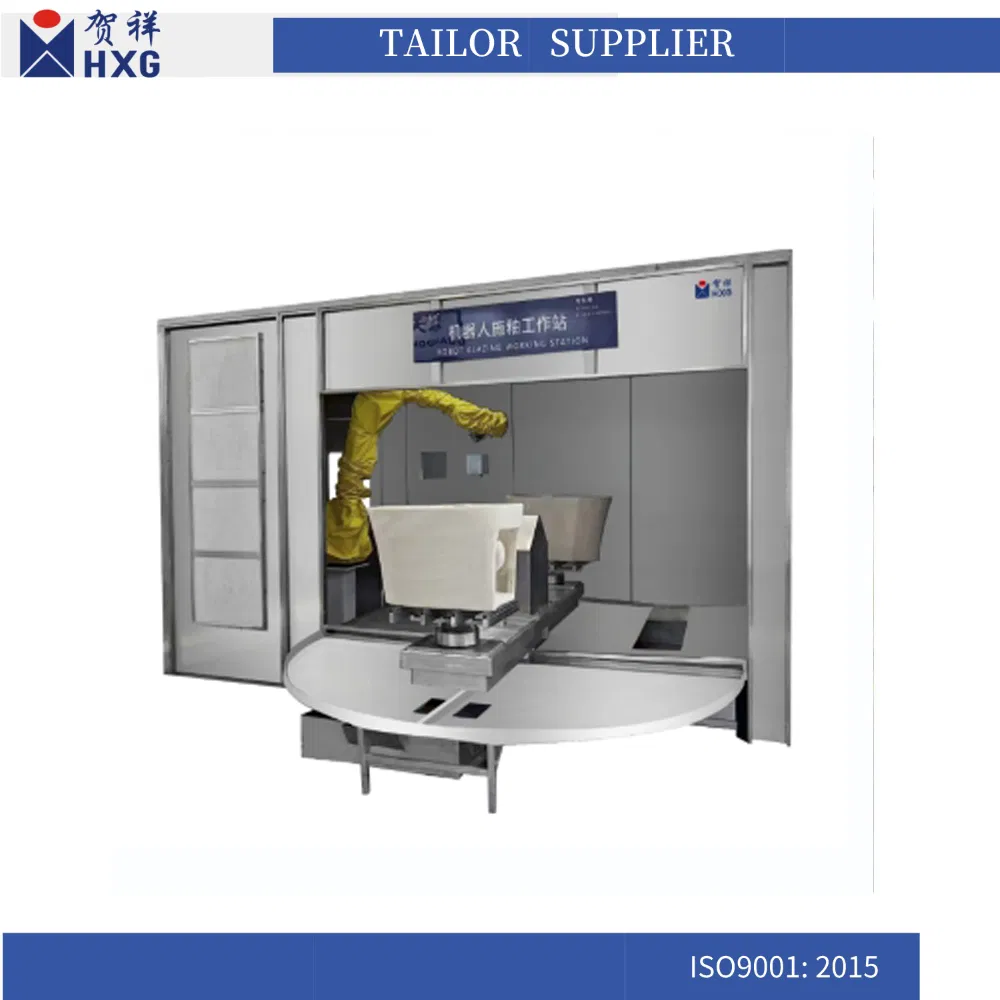
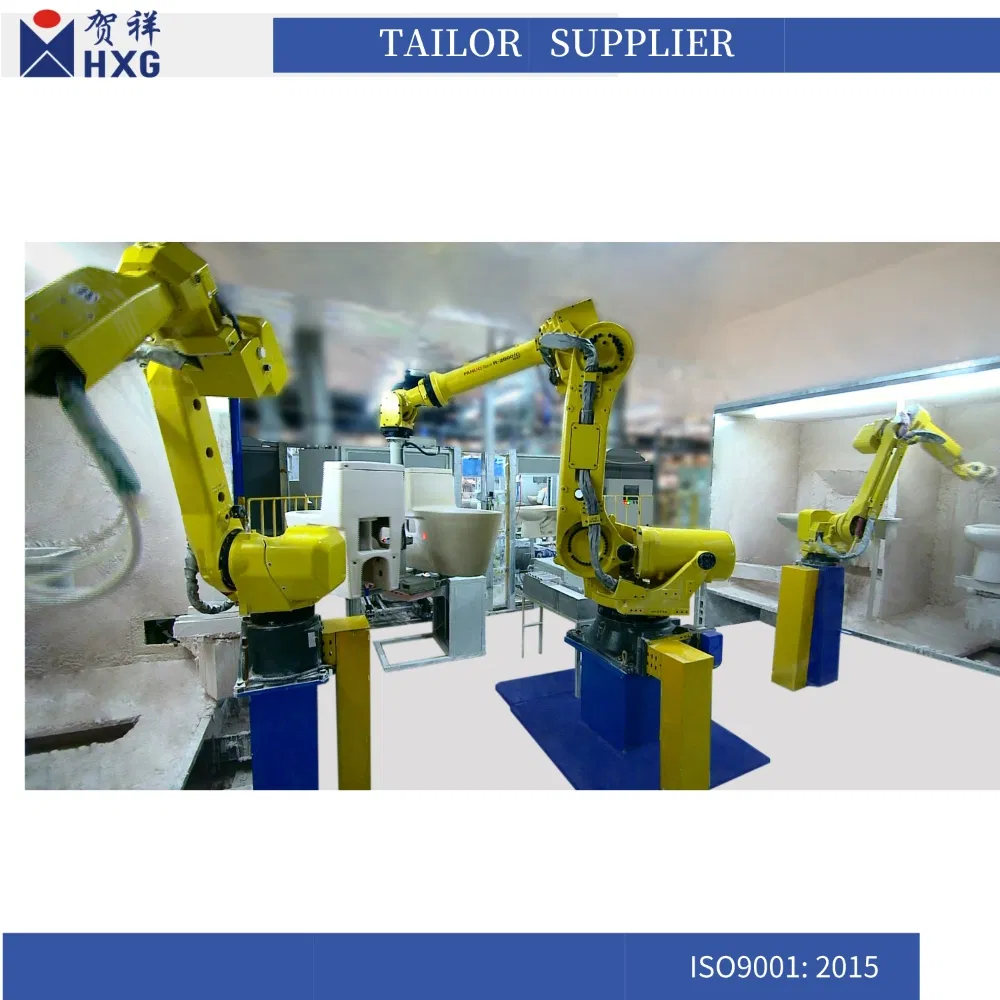
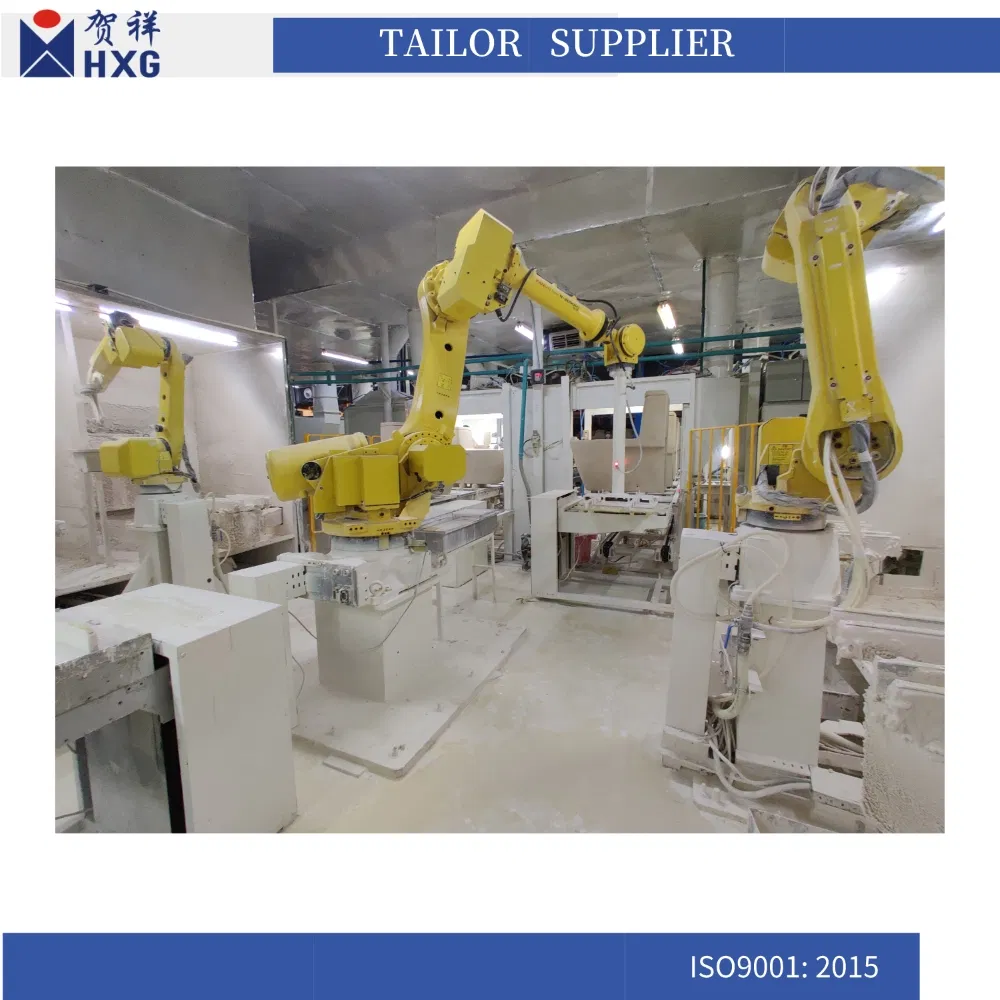
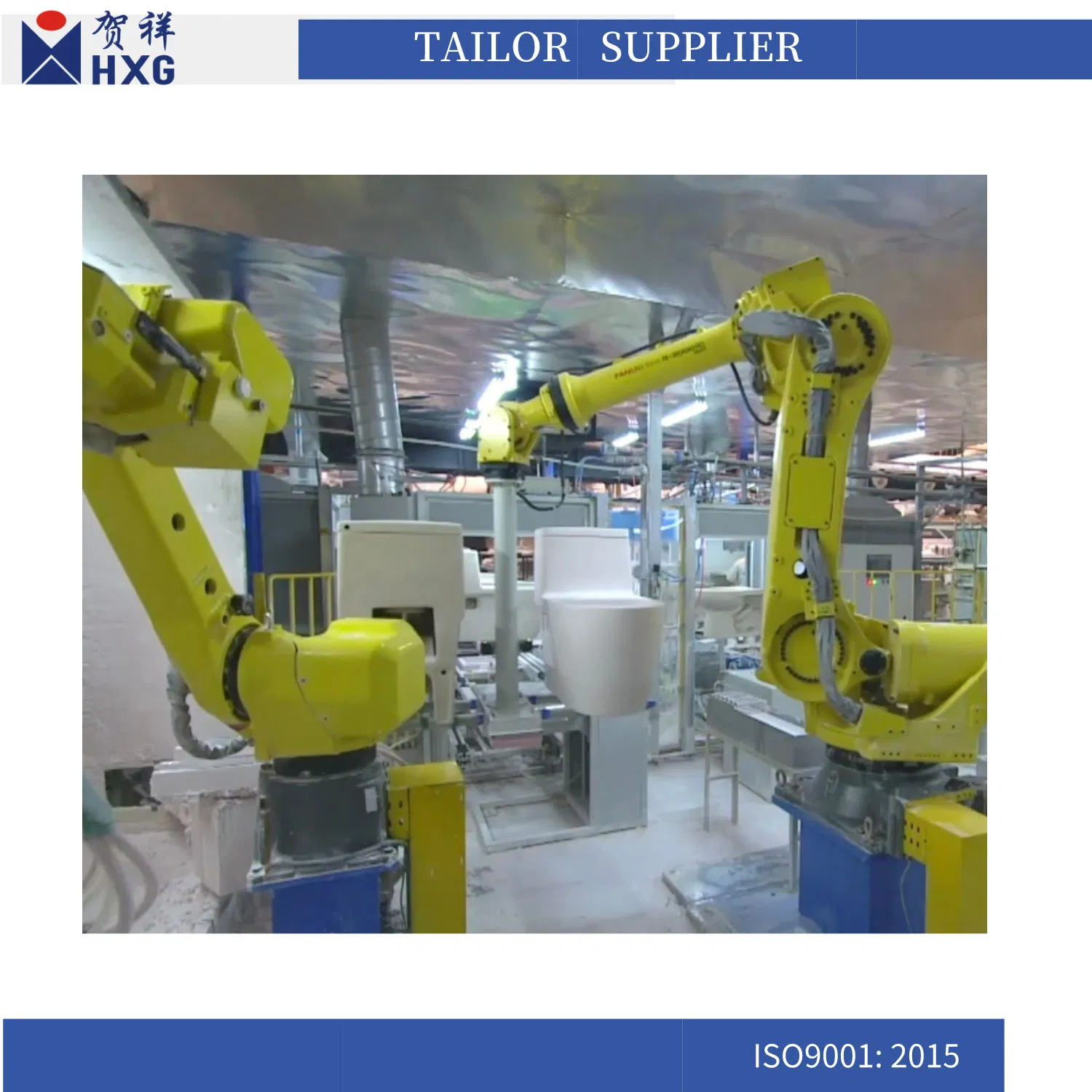
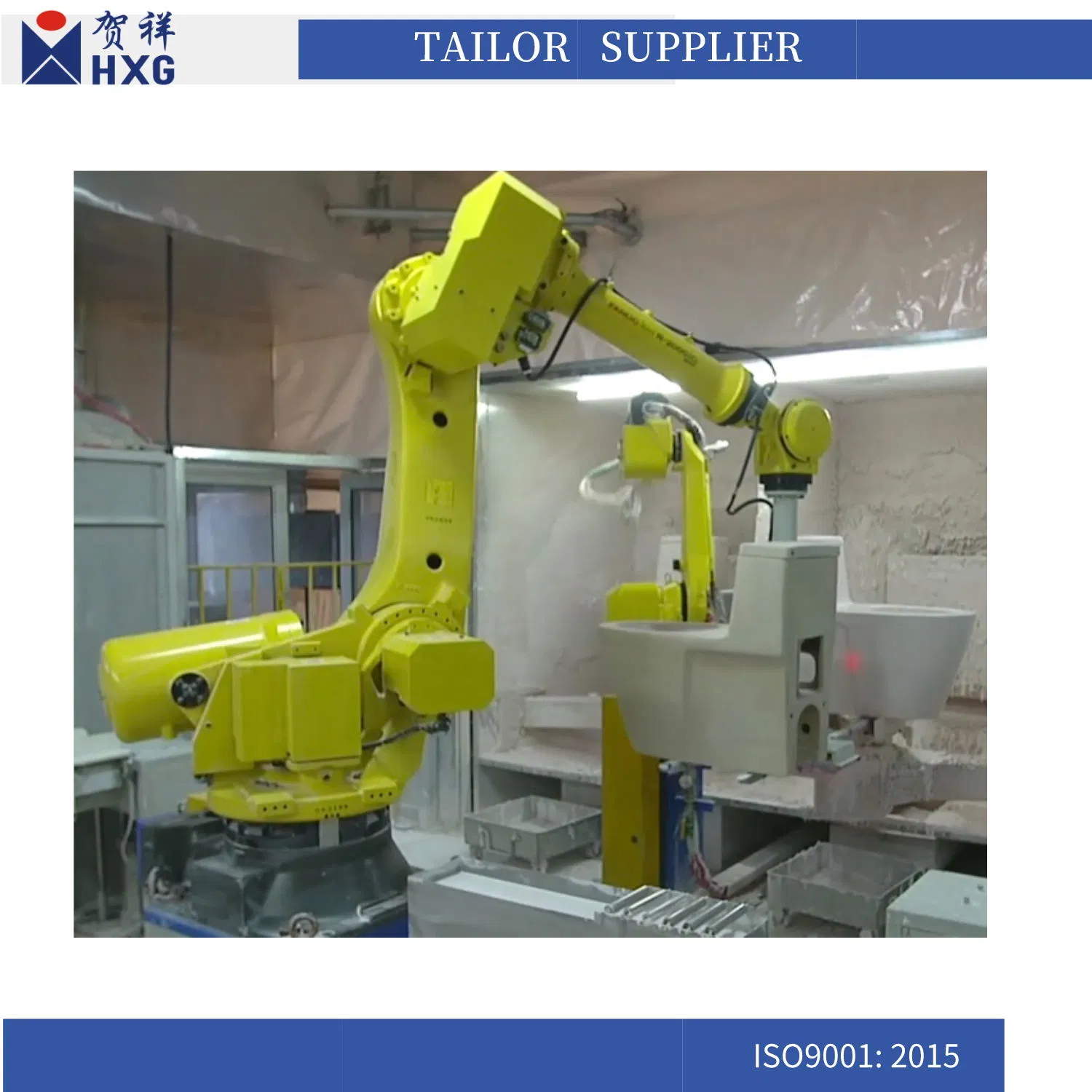
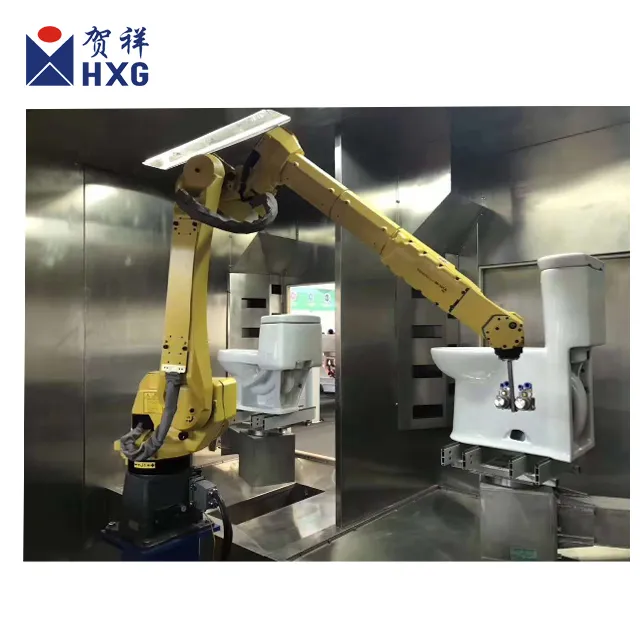
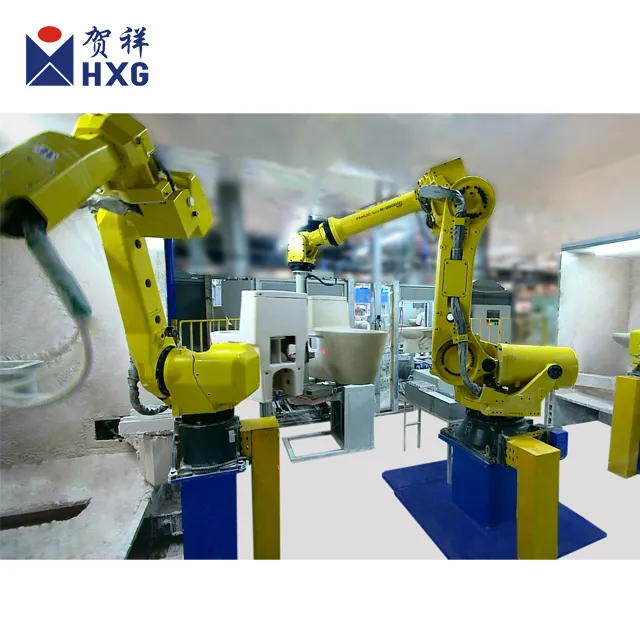
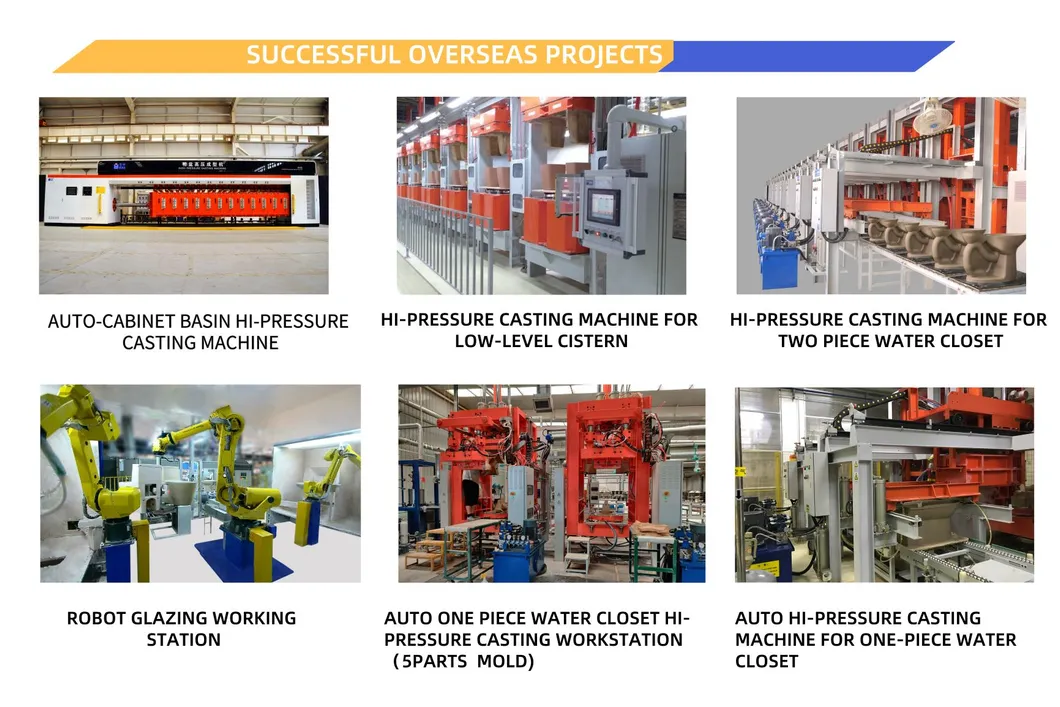
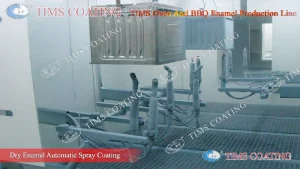
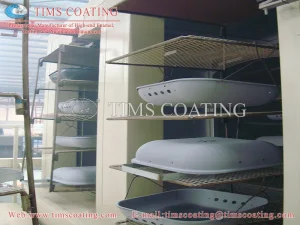
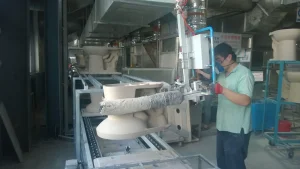
This robot glazing station is designed for the automatic glazing of various sanitary ware products. By utilizing advanced robotics instead of manual labor, this system significantly reduces operational costs, saves staff wages, and minimizes occupational health risks. The resulting glaze surface is perfectly uniform, ensuring superior product quality and high efficiency in management by eliminating human error.
This workstation employs a double-station glazing method. This allows operators to repair and label products during the robot's glazing intervals. A single operator can now perform tasks that previously required 2 or 3 people, greatly enhancing efficiency. The automated process ensures stable quality with a high qualification rate. The user-friendly man-machine interface makes daily operations intuitive and convenient.
Frequently Asked Questions
What are the main benefits of using a glazing robot?
The robot ensures a uniform glaze thickness, reduces labor costs by replacing multiple workers, and minimizes occupational diseases related to manual glazing.
Which robot brands do you integrate?
We primarily use Japan Fanuc robots combined with Germany Siemens PLC control systems for maximum reliability and precision.
Is the glazing booth corrosion-resistant?
Yes, the booth is constructed from high-quality 304 stainless steel with a thickness of 1.2-2mm to ensure long-term durability in wet environments.
How many types of products can be glazed?
The system is versatile and can glaze over 15 categories of sanitary ware, including one-piece toilets, two-piece toilets, basins, tanks, and lids.
What is the glazing efficiency of the machine?
The glazing cycle varies by product; for example, a water closet takes approximately 180-210 seconds, while basins and tanks take between 120-140 seconds.
What is the effective utilization rate of the glaze?
The robot glazing station achieves an effective glaze utilization rate of approximately 70% with a very low fault rate of only 2-3%.
 DD-Tech Print