Choosing the right printhead for ceramic tile is not a simple brand comparison. In 2026, the answer depends on ink chemistry, glaze behavior, line speed, and the level of detail required. The key question is: Which printhead technology is best for ceramic ink? For many production lines, piezoelectric drop-on-demand heads are a strong candidate because they support controlled droplet placement and can work with demanding ceramic inks. But there is no universal winner. A head that prints crisp veins on a glossy tile may struggle with a different ink’s particle size or viscosity.
Look closely at the production details. Check nozzle reliability, waveform control, recirculation options, resolution, and the cost of maintenance. Ask suppliers to run your actual ink on your actual tile body. Inspect the result under factory lighting, not only on a monitor. Small defects matter.
One important sourcing note: no article or verifiable expert quotation was provided with this request. I will not invent a specialist’s name or quote. Before publication, add a direct, sourced comment from a ceramic inkjet engineer or printhead manufacturer, then confirm the wording and attribution. That extra step may feel inconvenient. It is still better than presenting an unsupported quote as authority.
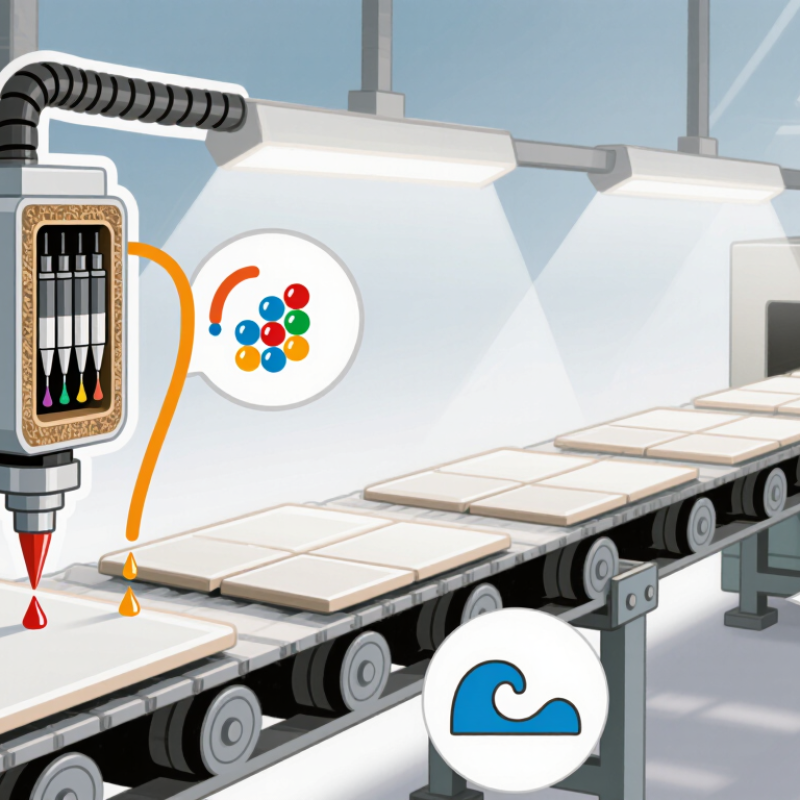
Best Ceramic Tile Ink Printhead Technology in 2026
Ceramic Tile Inkjet Printing: Core Principles and Process
Ceramic tile inkjet printing converts a digital image into controlled droplets of ceramic ink. Piezoelectric printheads use pressure pulses to eject droplets through tiny nozzles. The tile or print bar moves in a timed pattern, building color across the surface. Small drops matter. They influence edge sharpness, tonal transitions, and how evenly the design covers textured glaze.
The process usually includes body forming, drying, applying engobe or glaze, inkjet decoration, and firing. The European Commission’s Ceramic Manufacturing Industry BREF describes tile firing temperatures broadly around 1,000–1,300°C. That heat fixes the decoration, but it can also shift color. Ceramic World Review’s 2024 survey estimated 2023 global tile production at about 15.5 billion square metres, underscoring the need for stable, repeatable production. A large output figure does not guarantee consistent print quality.
On the line, operators monitor ink viscosity, nozzle condition, tile temperature, and registration between print bars. A pale stripe on a test tile may point to a blocked nozzle, uneven glaze, or incorrect drop timing. Not magic. Calibration helps, yet it cannot remove every variation in raw materials or surface texture. A useful process record links each print setting to fired samples, not just the image shown on screen. One weak point remains: a visually clean unfired tile can still change noticeably after firing.
A ceramic tile printhead transfers ink through a row of microscopic nozzles onto each moving tile. Many systems use piezoelectric drop-on-demand technology: an electrical pulse flexes a tiny chamber and releases a measured droplet. Ink travels from a reservoir through filters and narrow channels, so stable flow matters. Air bubbles, settled pigment, or dried residue can interrupt the pattern. Small drops matter. They shape fine edges, subtle shading, and the texture visible across a tile’s surface.
Print quality depends on more than the head itself. Ink viscosity, temperature, firing behavior, and the distance between the nozzles and tile all affect placement. Operators may adjust drop size and firing waveforms, then inspect test patterns for missing lines or blurred edges. A nozzle check is useful, but it cannot reveal every issue. Slight tile movement can still shift a pattern. After printing, ceramic inks are typically fired so their colors bond with the surface. The exact process varies with the ink and tile body. Clean nozzles help. Even careful settings need regular review, because a production line rarely stays perfectly consistent.
| Technology or factor | How it works | Ceramic ink considerations | Practical effect on tile printing |
|---|---|---|---|
| Piezoelectric drop-on-demand | An electrical pulse deforms a piezoelectric element, changing chamber pressure and ejecting a controlled ink drop through a nozzle. | Commonly used for industrial ceramic inkjet because it can eject formulated, particle-bearing inks without relying on thermal boiling. | Enables digitally controlled placement of ceramic ink droplets; achievable results depend on the printhead, ink, and process settings. |
| Ink circulation and recirculation | Ink flows through supply paths and, in recirculating designs, near or through the head to help maintain ink movement. | Continued movement can help limit settling and concentration changes in suspensions containing ceramic pigment particles. | Supports consistent delivery during production, but does not eliminate the need for suitable ink formulation, filtration, and maintenance. |
| Nozzle and particle-size matching | Nozzles form and release droplets through small openings; ink particles and agglomerates must pass through the fluid path. | Particle-size distribution, agglomeration, and filtration should be compatible with the selected head. Requirements vary by nozzle design and ink. | Poor matching can increase the risk of nozzle blockage, missing jets, or unstable drop formation. |
| Viscosity and surface tension | These fluid properties influence how the ink fills the chamber, forms a droplet, and separates from the nozzle. | The ink must fall within the printhead’s specified operating window at the actual operating temperature. | Out-of-range properties can lead to satellites, misdirected drops, weak ejection, or inconsistent coverage. |
| Waveform and drop control | The drive waveform controls the timing and shape of the pressure pulse applied to the piezoelectric actuator. | Waveform tuning needs to account for the ceramic ink’s viscosity, temperature, and particle loading. | Careful tuning helps stabilize drop formation and placement across the tile’s printed image. |
| Tile surface and drop spreading | After landing, a droplet spreads and interacts with the tile surface before drying or firing. | Surface porosity, texture, cleanliness, and surface energy affect wetting and image formation. | Surface preparation and ink settings influence edge definition, color appearance, and coverage. |
| Firing and color development | Printed ceramic materials are processed according to the tile production recipe, which may include drying and kiln firing. | Pigments and compatible ink components must be selected for the intended firing conditions and ceramic body or glaze. | The final color and surface appearance are determined after processing, not solely by the wet ink on the tile. |
| Maintenance and printhead protection | Capping, purging, cleaning, and controlled shutdown procedures help protect the nozzle plate and ink pathways. | Dried residue and settled particles can interfere with ejection; maintenance procedures must be compatible with the ink and head. | Following the specified operating and cleaning routine helps reduce interruptions and maintain print consistency. |
Operating limits and compatibility are specific to the printhead and ceramic ink formulation. Confirm technical requirements with the relevant specifications and validate them under production conditions.
Major ceramic tile inkjet systems still rely mainly on piezoelectric drop-on-demand printheads. A piezoelectric element flexes when an electrical pulse arrives, releasing a controlled ink droplet. This method supports fine details, smooth color transitions, and repeatable patterns across wide tile surfaces. In 2026, printhead designs increasingly focus on stable droplet formation and reliable operation with dense ceramic inks. Those inks can contain particles that settle or wear nozzle surfaces, so ink circulation and filtration matter as much as resolution.
Recirculating ink paths help keep pigments moving and reduce the risk of sediment collecting near nozzles. Waveform control can adjust droplet size and placement, while careful temperature and viscosity management supports consistent firing. The best setup depends on the ink, tile texture, and production speed—not just the smallest advertised droplet. A glossy tile and a rough, textured one may need different print settings. There is no perfect configuration. Small shifts in ink condition can still affect results.
Tips: Check nozzle performance with a test pattern before a long run. Keep ink moving, follow the printhead maker’s maintenance guidance, and record changes in viscosity or temperature. If banding appears, inspect the ink path before changing every setting. Sometimes the cause is less obvious than expected.
Evaluate a printhead on repeatability, not its advertised maximum speed. Print a solid test bar across the full tile width, then inspect under magnification for missing jets, banding, and edge buildup. Repeat after a production-length run. A head that looks sharp for five minutes may drift after an hour. Check drop placement and color consistency across multiple firing cycles, since kiln results can expose weaknesses that are invisible on wet tiles.
Efficiency means more than tiles per hour. Measure usable output, cleaning time, ink waste, and unplanned stoppages together. Grand View Research estimated the global digital printing market at about $36.2 billion in 2023, with projected growth through 2030; this broad market figure signals investment, not guaranteed tile-line performance. Ask suppliers for documented endurance-test conditions and compare results using the same ink, tile surface, and firing profile. I would still treat short demonstrations cautiously.
Tips: Confirm ink viscosity, particle size, filtration, recirculation, mounting dimensions, and control-system support before purchase. Test the actual ceramic ink. A mismatch can cause clogging, unstable drops, or extra maintenance. Keep a simple log of nozzle checks and cleaning cycles; small patterns often reveal trouble early.
Best Ceramic Tile Ink Printhead Technology in 2026
Choosing a printhead for ceramic tile production starts with the ink, not the catalog. Check that its fluid path suits the glaze ink’s viscosity and particle size. A mismatch can cause weak color, blocked nozzles, or uneven edges. Small defects matter. A fine line may look clean on a screen but break across a textured tile.
Match drop size and resolution to the design and production speed. Test on the actual tile body, then inspect the image before and after firing. Glaze movement can change fine details. Keep a record of ink settings, tile type, and firing conditions; otherwise, troubleshooting becomes guesswork. A test run takes time, but skipping it can cost more.
Maintenance should be regular and gentle. Follow the ink supplier’s flushing guidance, check nozzle patterns, and keep the cap station clean. Use filtered ink and avoid letting the head sit idle with exposed nozzles. It is easy to blame the printhead when color drifts. Sometimes the real cause is inconsistent ink temperature or a dirty maintenance station. Even a good routine can miss things, so note recurring faults and review the process rather than replacing parts too quickly.
An electrical pulse flexes a small chamber and releases a measured droplet through a nozzle. Tiny drops shape fine edges and shading.
Air bubbles, settled pigment, or dried residue can block narrow channels. Small drops matter. Filters and steady ink flow help.
Print a solid test bar across the tile width. Inspect for missing jets, banding, and rough edges under magnification.
A printhead may look sharp for five minutes, then drift after an hour. Repeat checks after a longer run. I would not trust a brief demonstration alone.
Measure usable tiles, cleaning time, ink waste, and unexpected stoppages together. Speed alone can give a misleading picture.
No. It can show missing lines, but tile movement may still shift a pattern. Regular review catches some issues, not all.
Confirm ink viscosity, particle size, filtration, recirculation, mounting dimensions, and control-system support. Test the actual ceramic ink. A mismatch may cause clogging or unstable drops.
Firing bonds ceramic ink with the tile surface, and results depend on the ink and tile body. Wet tiles can hide weaknesses. That detail is easy to overlook.
Ceramic tile inkjet printing transforms digital designs into durable surface patterns by precisely depositing ceramic inks onto prepared tile surfaces before drying and firing. Printheads control this process through carefully timed droplets, with ink flow, droplet size, placement accuracy, and compatibility with dense or particle-rich inks all influencing image quality. Different printhead technologies offer distinct balances of resolution, production speed, durability, and maintenance needs, so the ideal choice depends on the tile design and manufacturing conditions.
Which printhead technology is best for ceramic tile ink depends on the ink formulation, required detail, line speed, equipment configuration, and expected operating life. Evaluate printhead quality through consistency, reliability, and resistance to clogging, while also considering cleaning requirements, ink compatibility, and replacement costs. Selecting the right printhead involves matching these factors to production goals, then maintaining it with suitable inspection, cleaning, and ink-handling practices to support consistent results and efficient operation.

DD-Tech Print