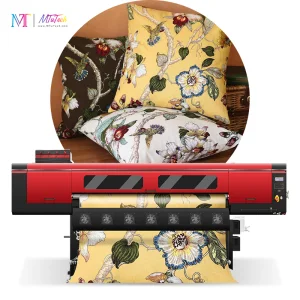
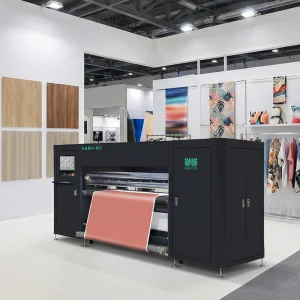
Explore our elite range of high-efficiency roll-to-roll textile printers, DTG flatbeds, UV inkjet systems, and original replacement modules designed for continuous production cycles.
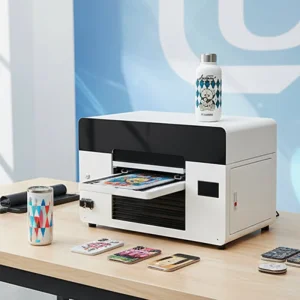
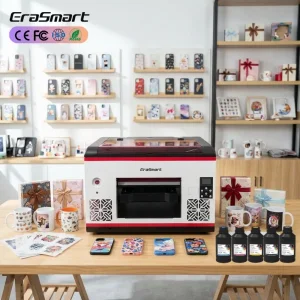
Zhuhai DD-Tech Print Equipment Co., Ltd. is a recognized global pioneer in the design, engineering, R&D, and large-scale manufacturing of high-speed industrial digital inkjet printing systems. We service demanding, high-throughput markets including building materials, fine ceramics, commercial packaging, and industrial textiles.
Our commitment centers on resolving complex processing constraints, maximizing raw output efficiency, and significantly reducing carbon footprints through high-performance machinery. In the modern manufacturing space, digital integration is not simply an upgrade—it is a competitive necessity. DD-Tech acts as the strategic partner that secures your supply chain with top-tier industrial roll-to-roll machinery and components.
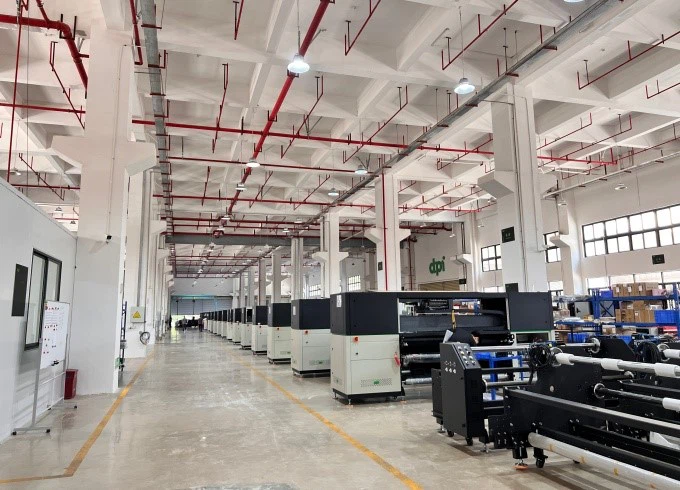
Underpinning our manufacturing capabilities are deep investments in mechanical validation, fluid dynamics, and algorithmic image rendering.
Our centralized R&D facility focuses strictly on high-performance industrial inkjet innovations. With multiple patents spanning advanced printhead waveform controls, real-time closed-loop ink circulation setups, and complex color profiling algorithms, we ensure our printers hit unmatched micro-precision marks across varying media profiles.
Based in Zhuhai, China, our manufacturing plant incorporates digital tracking from incoming component inspection to final stress tests. Frames undergo heat-treatment stress relief, linear rails are aligned using laser interferometers, and ink systems endure 72-hour continuous purge testing to meet international reliability benchmarks.
All facilities maintain strict compliance with ISO 9001 standards. Our equipment lines carry CE conformity, RoHS declarations, and environmental certifications matching emission laws globally. We maintain transparent testing logs to help customers satisfy stringent localized EHS audits effortlessly.
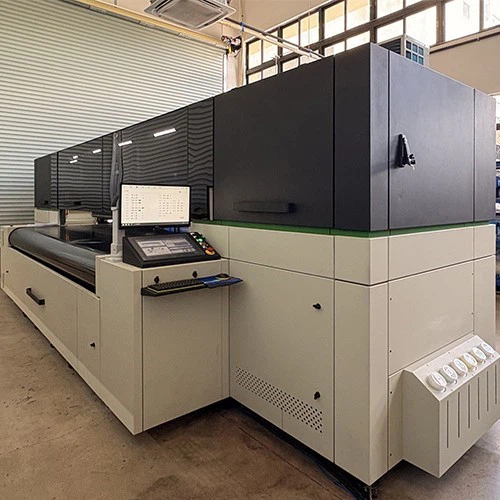
Industrial printing operations demand equipment that delivers high ROI, low total cost of ownership (TCO), and minimum downtime. Procurement directors at global textile mills require systems that reconcile high processing speeds with low maintenance overhead. Roll-to-roll (R2R) printers must handle wide webs—ranging from 1.6m to 3.2m—while maintaining micro-step media feeding precision without skewing.
We work directly with wholesale agents, manufacturing operations, and commercial distributors to design tailormade configuration matrices. Whether upgrading a legacy screen printing line to digital sublimation or installing direct-to-fabric pigment lines with inline infrared fixation, DD-Tech guarantees short lead times, robust container-level logistics, and clear component traceability.
Analyzing the technical features that drive modern industrial textile print lines.
To prevent sediment build-up and nozzle clogging, our high-speed printers utilize a pressurized, continuous ink recirculation system right to the printhead nozzle plate. This keeps pigment inks suspended evenly, dramatically reducing purge waste and optimizing color consistency across shifts.
Elastic and delicate fabrics (like spandex, silk, or lightweight polyesters) require precise tensioning. Our multi-point sensor feeding systems continuously calculate roll diameters, adjusting the servo torque dynamically. This eliminates fabric distortion and skewing.
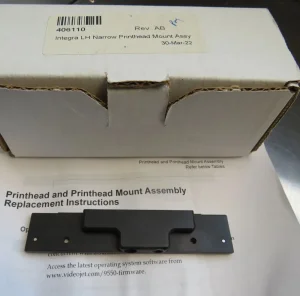
Configured with leading printheads (Kyocera, Epson, Ricoh), our physical mounting plates allow micro-level adjustment. Paired with our proprietary RIP software mapping, we achieve precise drops at high speeds, even during multi-pass and high-density printing.
Where industrial digital textile printing is heading, and how we are preparing our clients for the shift.
Maximizing output speeds past 600m²/hr on ultra-thin transfer papers. Focus is on reducing drying times and integrating high-volume continuous ink supply systems (CISS).
Advancing eco-friendly textile printing with zero-water pigment inks. By refining direct-to-fabric feeding and in-line thermal polymerization, we bypass traditional pre-treatment and washing stages.
Integrating high-resolution optical camera arrays on the carriage to scan prints in real time. The system flags nozzle deflection and automatically triggers cleaning cycles to prevent wasted runs.
We work with national distributors and large textile conglomerates to deliver tailor-made equipment packages. From custom frame colors and private-label software interfaces to local technician training, we establish reliable systems to ensure your operational continuity.
In-depth answers to critical technical questions concerning industrial roll-to-roll printers.
Sublimation printing involves printing onto transfer paper, which is then heat-transferred onto polyester-rich fabrics using a calender. It offers vibrant colors and sharp details but is limited to synthetic fibers. Direct-to-fabric printing applies ink directly onto pre-treated natural or synthetic fibers (like cotton, silk, or linen) followed by inline or offline fixing (steaming/baking). Direct printing handles a wider range of materials but requires more complex pre- and post-treatment setups.
We utilize an active, dual-servo tension-regulation system. High-precision rotary encoders track the roll diameters of both the feeding and take-up assemblies. This data is processed by the central PLC to adjust torque and speed in real time, preventing material stretch, wrinkling, or drift across the print zone.
Depending on speed and budget requirements, we offer Epson i3200-A1 configurations for cost-effective, high-resolution applications, and industrial Kyocera or Ricoh Gen6 printheads for 24/7 continuous operations requiring maximum durability and high print speeds.
All our standard models carry CE marking, comply with RoHS directives for hazardous materials, and feature components built to UL standards. Our ink partners provide formulations carrying OEKO-TEX Eco Passport certifications, making the printed output safe for children's apparel and home goods.
Our systems feature automated capping stations that seal the printhead nozzles when idle to prevent drying. A periodic, automated micro-spit and wipe routine keeps the nozzles wet and clear during standby, minimizing ink waste and setup times before the next run.
Complete your production floor with our high-speed single-pass printers, automated coating lines, and critical replacement modules.
 DD-Tech Print