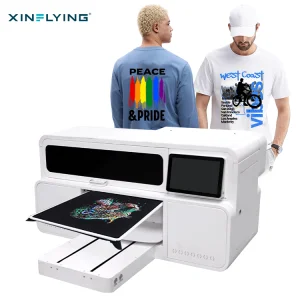
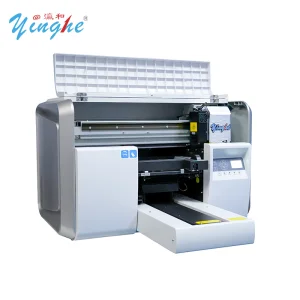

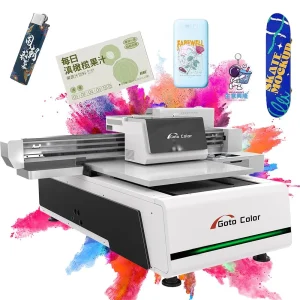
In the era of modern digital manufacturing, the Industrial Inkjet Controller functions as the central nervous system of any high-speed digital printing press. Unlike commercial desktop printing components, industrial-grade control boards execute complex computations in real-time. They process gigabits of raster image processor (RIP) data per second, driving dynamic piezoelectric ceramic channels to drop picoliter-sized ink drops with micrometer accuracy. Achieving sub-pixel precision across fast-moving media webs requires specialized hardware coordination, making the choice of manufacturing partners critical for system integrators globally.
Leading Chinese manufacturing clusters have advanced from basic PCB assembly to producing state-of-the-art FPGA (Field Programmable Gate Array) and ARM-driven controller systems. These controllers handle precise waveform modulation, multi-level grayscale configurations, and real-time ink recirculation synchronization. By utilizing high-density optical fiber data links, modern controllers isolate sensitive printhead electronics from electromagnetic interference (EMI) typical in heavy-industrial packaging, textile, and ceramic environments.
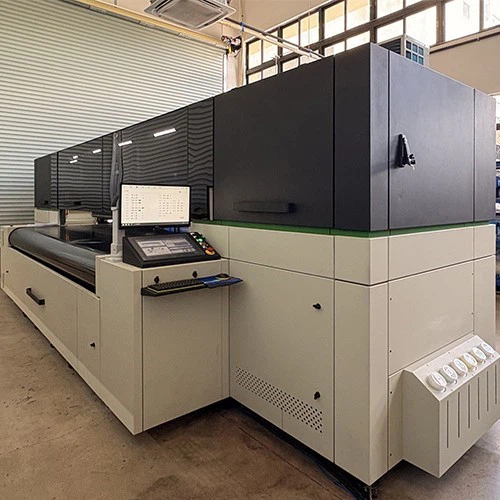
Zhuhai DD-Tech Print Equipment Co., Ltd. is a global leader specializing in the research, development, manufacturing, sales, and service of high-speed industrial digital inkjet printing systems. We provide advanced printing solutions for industries such as building materials, ceramics, textiles, and packaging, focusing on enhancing product quality, production efficiency, and sustainability.
Our R&D center is dedicated to advancing digital inkjet technology. With numerous patents in key areas like print head control, ink circulation systems, and color management algorithms, we leverage our proprietary technologies to offer high-performance industrial printers that meet the diverse needs of our global customers. By working directly with printhead manufacturers, we fine-tune drive waveforms to maximize droplet placement accuracy.
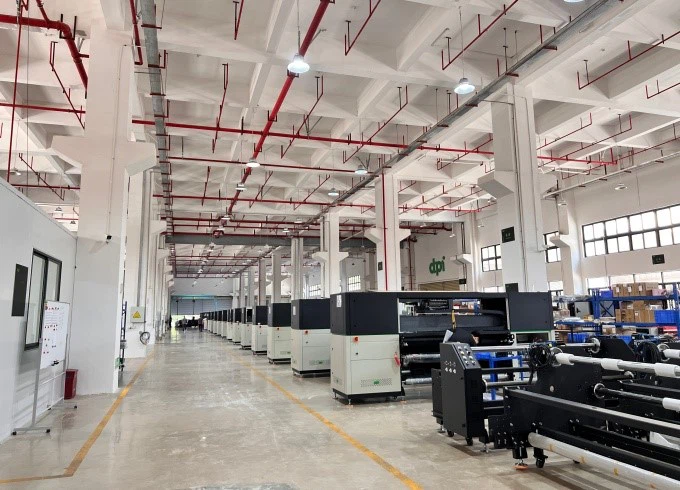
Our production base in Zhuhai, China, is equipped with state-of-the-art facilities and a stringent quality control system. Every product is meticulously assembled and tested by our professional team to ensure it meets the highest standards of performance and reliability. We incorporate intelligent manufacturing processes to optimize production efficiency and quality.
DD-Tech has obtained ISO 9001 certification and other industry-specific environmental and safety certifications, ensuring our products meet international quality and safety standards. Our numerous patents further highlight our technological strength in digital inkjet printing.
We are committed to promoting sustainability by helping businesses transition to digital printing, reducing waste, energy consumption, and improving resource efficiency. Through smart manufacturing, we aim to enhance operational efficiency and decision-making, driving the future of industrial production.
Global OEMs and printhead developers source from Chinese suppliers due to the unique industrial clusters that lower manufacturing costs while maintaining high quality. Regional production hubs, such as Zhuhai, offer a complete ecosystem of engineering talent, component manufacturers, and direct testing laboratories.
From high-density multilayer PCBs and high-frequency data cables to precision pneumatic valves and localized ink filtration subsystems, every sub-component is sourced within a small geographical radius, minimizing lead times and reducing component overhead.
FPGA firmware verification, board layouts, and thermal modeling iterate rapidly. What takes months in other regions is completed in weeks through integrated co-engineering practices in Chinese tech hubs.
High production volumes allow Chinese factories to purchase components at bulk rates. These savings are passed to international clients through competitively priced controllers and printing systems.
Piezoelectric printheads (such as Epson I3200, Ricoh Gen5/Gen6, Kyocera KJ4 Series, and Konica Minolta 1024i) rely on precise electrical pulses to control droplet sizes and jetting directions. An industrial inkjet controller modifies these pulses via custom software to adjust the printhead's physical response.
By applying multi-pulse waveforms, our controller causes the nozzle chamber to release several micro-droplets in quick succession. These combine mid-flight into a single larger drop. This process allows the system to achieve up to 8 levels of grayscale, enabling fine text reproduction alongside high-density solid fills.
Ink viscosity changes with ambient temperature. The controller continuously monitors temperature sensors near the printhead nozzle plate, adjusting the heating elements and the negative pressure sub-tanks in real time. This mechanism prevents ink starvation at high frequencies and stops dripping when idle.
Deploying industrial systems internationally requires compliance with local regulations and integration with existing control networks. Our controllers are built to support diverse global applications.
The board architecture integrates with PLC units via standard industrial protocols like Modbus TCP/IP, EtherCAT, and CANopen. This allows the printer to communicate directly with robotic loaders, inline inspection systems, and central factory controls.
We provide software development kits (SDKs) in C++, C#, and Python, with multilingual interfaces for global operators. Localized documentation simplifies installation and troubleshooting for local engineers.
To meet the requirements of Western markets, our systems are built and tested for compliance with CE, FCC, and RoHS guidelines. The design incorporates galvanic isolation and shielding to operate reliably under variable voltage and industrial EMI conditions.
Industrial controllers serve as the core processor for various high-output manufacturing setups. By customizing firmware, these systems adapt to the material dynamics, speed, and fluid conditions of specific industries.
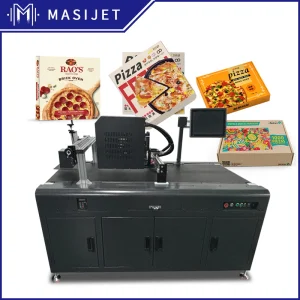
In corrugated box production, boards move under fixed print bars at speeds exceeding 150 meters per minute. The controller synchronizes encoder signals to trigger individual printhead nozzles. It manages ink recirculation systems to prevent nozzle clogging during variable data runs.
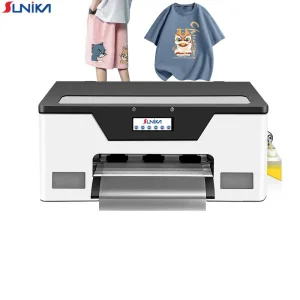
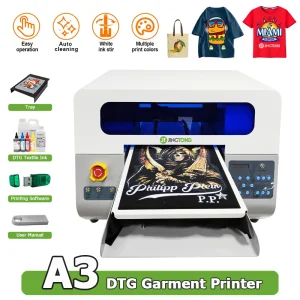
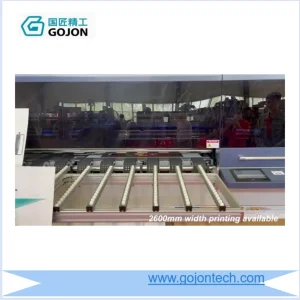
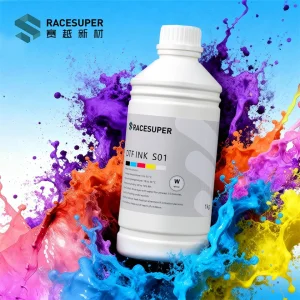
Textile environments require constant tension control and printhead height tracking. Our controller systems manage the dual-gantry motion of DTF and DTG printers. This maintains precise registration across stretchable materials and coordinates UV curing lamps to dry inks instantly.
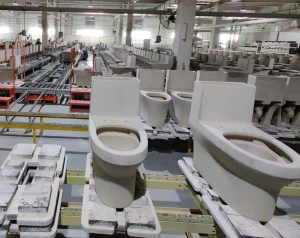
Decorating textured floor tiles and exterior panels requires long throw distances and large, high-viscosity ink droplets. The controller drives high-voltage pulse waveforms to project heavy fluid drops onto uneven surfaces without misting.
Printing trackable barcodes, QR codes, and security codes requires high-speed rendering of unique, non-repeating layouts. Our high-bandwidth controllers interface directly with print queues to render raster data on the fly.
As the digital printing industry moves toward faster production speeds and higher output resolutions, the controller hardware must advance accordingly. Direct integration of optical transceivers on the main board is replacing traditional copper cabling to prevent signal loss over longer distances.
We are incorporating on-board machine learning logic to perform real-time nozzle health monitoring. By analyzing high-speed return signals from the driver circuit, the system detects misfiring nozzles and adjusts nearby working jets to cover the missing pixels. This self-healing process reduces printing defects and keeps production runs moving smoothly.
 DD-Tech Print