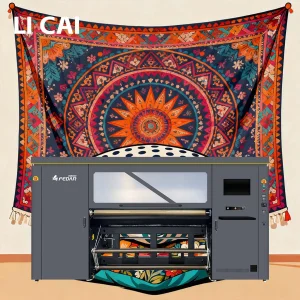
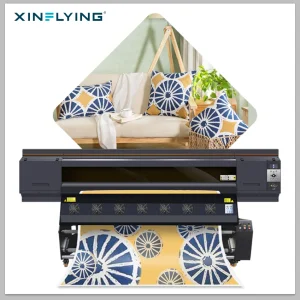
Premium high-speed dye-sublimation hardware optimized for the Australian capital's commercial demands
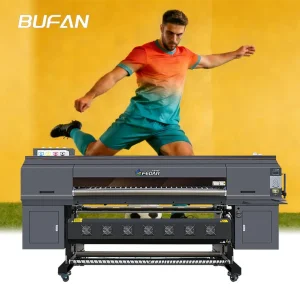
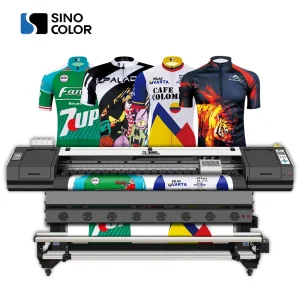
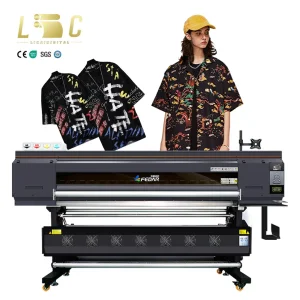
Canberra, the administrative and federal heart of Australia, presents a highly sophisticated landscape for commercial signage, exhibition graphics, customized public sector materials, and boutique textile apparel. Unlike heavy manufacturing zones located in metropolitan hubs like Sydney or Melbourne, the Canberra industrial print market is characterized by precision, localized fulfillment, rapid turnaround times, and strict environmental compliance.
In industrial areas such as Fyshwick, Mitchell, and Hume, local design houses and commercial sign-makers cater directly to Commonwealth government agencies, national museums, defence associations, and local sports leagues (such as ACT Rugby Union and local soccer clubs). The demand for dye-sublimation transfer technology in Canberra has surged dramatically over the past five years. This shift is driven by the need for high-end soft signage, custom apparel, and sustainable banners that conform to the Australian Capital Territory's (ACT) ambitious carbon-neutrality initiatives. Traditional screen printing is increasingly obsolete due to municipal restrictions on chemical effluents, positioning low-waste digital dye-sublimation printers as the premium technology of choice.
Zhuhai DD-Tech Print Equipment Co., Ltd. is a recognized global pioneer and manufacturing leader specializing in the research, development, assembly, sales, and technical service of high-speed industrial digital inkjet printing systems. We provide advanced printing solutions for industries such as building materials, ceramics, textiles, and packaging, focusing on enhancing product quality, production efficiency, and long-term sustainability.
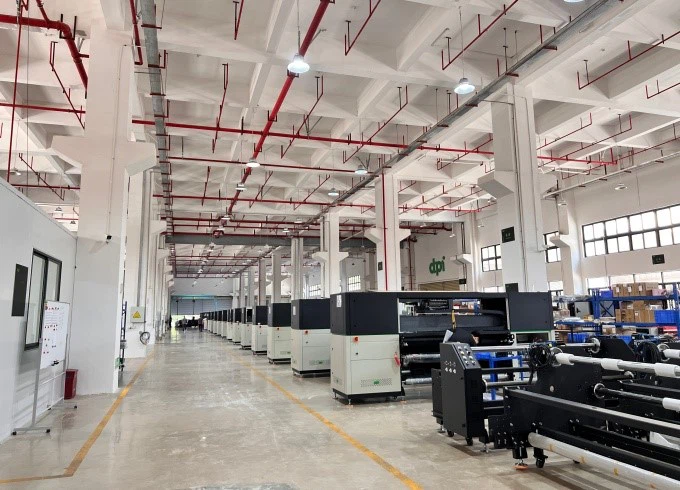
Figure 1: Zhuhai DD-Tech State-of-the-Art Intelligent Inkjet Manufacturing and R&D Base
By leveraging state-of-the-art facilities and a highly specialized technical engineering team, we have bridged the gap between raw hardware assembly and precision system-level engineering. Our primary goal is to empower print service providers (PSPs) and global procurement agents to maximize throughput while minimizing the Total Cost of Ownership (TCO).
Our R&D center is dedicated to advancing digital inkjet technology. With numerous patents in key areas like print head control, ink circulation systems, and color management algorithms, we leverage our proprietary technologies to offer high-performance industrial printers that meet the diverse needs of our global customers. By testing multiple physical and chemical parameters of thermal sublimation transfer papers, we design machines that maintain exceptional accuracy even at continuous high-speed print passes.
Our production base in Zhuhai, China, is equipped with state-of-the-art facilities and a stringent quality control system. Every product is meticulously assembled and tested by our professional team to ensure it meets the highest standards of performance and reliability. We incorporate intelligent manufacturing processes to optimize production efficiency and quality. This guarantees that every machine shipped to distributors in the Canberra region or European hubs operates with the exact same industrial stability.
DD-Tech has obtained ISO 9001 certification and other industry-specific environmental and safety certifications, ensuring our products meet international quality and safety standards. Our numerous patents further highlight our technological strength in digital inkjet printing. This high standard of compliance ensures that Australian importers and operators are fully protected under occupational health, safety, and equipment import guidelines.
Modern commercial textile buyers operate in a lean inventory environment where speed-to-market is the primary driver of profitability. When sourcing industrial-grade sublimation printers, global procurement entities evaluate multiple technical indicators beyond the initial capital expenditure (CAPEX):
By designing and configuring printers that resolve these mechanical and fluidic issues, Zhuhai DD-Tech delivers solutions that drastically reduce operational down-time. Our machines integrate advanced PLC controls and high-precision linear guide rails to prevent banding and chromatic errors, ensuring perfect prints even at high-speed drafts.
The digital textile printing sector is transitioning from traditional offline workflow systems to fully integrated, cloud-managed manufacturing pipelines. In our roadmap for 2025 to 2030, DD-Tech focuses on the integration of artificial intelligence (AI) color-calibration algorithms and smart inline optical sensors. These developments allow the printing system to automatically adjust voltage profiles for each nozzle line, compensating for slight density changes caused by room temperature variations.
Furthermore, our technical roadmap targets the adoption of eco-efficient, water-free printing technologies. Traditional sublimation still requires thermal energy for sublimation transfer onto polyester substrates. Our next-generation drying chambers leverage energy-efficient infrared heating coupled with intelligent heat recirculation, cutting electricity consumption by up to 35% compared to standard industrial heating tubes.
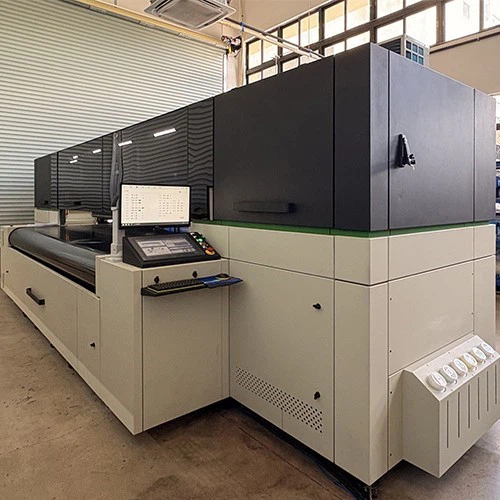
Figure 2: Assembly Line for Precision Inkjet Calibration and Component Rig Testing
Through these advancements, DD-Tech helps global business partners future-proof their operations against strict carbon regulations, and positions Canberra print shops to meet the highest sustainability criteria set by municipal and national public organizations.
Navigating compliance requirements in the Australian market is highly critical for commercial printing businesses. All machinery imported into Canberra and the surrounding territories must comply with the Regulatory Compliance Mark (RCM), which integrates electrical safety standards (AS/NZS 60950 or equivalent) and electromagnetic compatibility requirements.
At Zhuhai DD-Tech, we support our Australian distributors with complete certification documentation. We provide:
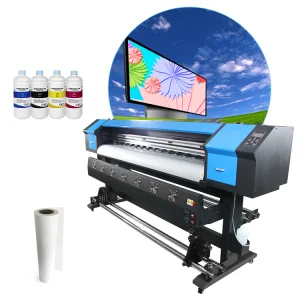
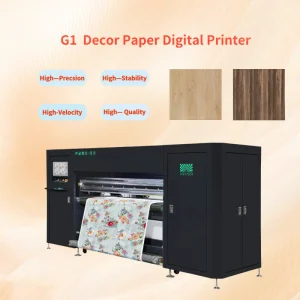
Explore our high-performance hardware designed for dynamic commercial workloads
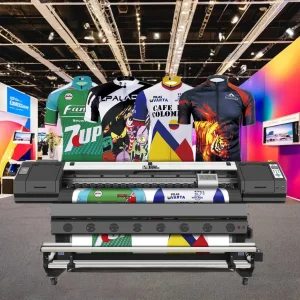
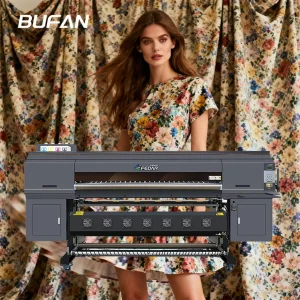
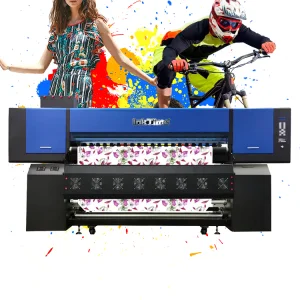
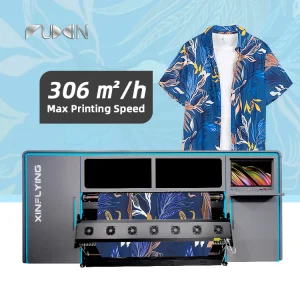
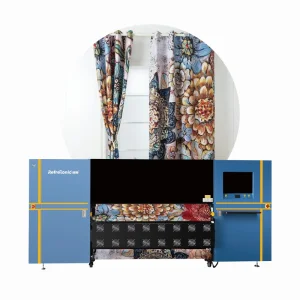
Expert answers addressing the main challenges in dye-sublimation technology
The Epson i3200 printhead features high-precision Variable Droplet Technology (VSDT), allowing it to jet ink droplets ranging from 3.8 to 12 picoliters. This enables extremely smooth gradients and crisp text, which are critical for fine logos and branding materials. Additionally, its high nozzle density (3200 nozzles per head) allows for fast single-pass or dual-pass coverage without sacrificing output resolution.
At high speeds, ink flow creates shear stress, causing dissolved gases in the ink to form micro-bubbles. These bubbles can block the ink channels, leading to missing nozzles and printing errors. Active vacuum degassers continuously remove these gases from the ink system. This allows for stable, unattended overnight printing without requiring manual printhead cleanings.
DD-Tech printers use an active feedback loop controlled by a digital PLC, which utilizes dual tension sensors on both the feed and take-up reels. This system automatically adjusts torque and rotation speeds to keep tension uniform. This is essential when printing on thin transfer papers (below 40 gsm), as tension spikes can cause paper stretching or head strikes.
Our systems support eco-friendly, water-based dye inks that carry OEKO-TEX Standard 100 certifications, meaning they contain no hazardous VOCs or alkylphenol ethoxylates. Additionally, our drying hoods use carbon-fiber infrared lamps combined with air recycling chambers. This reduces heat loss and lowers energy consumption by up to 35% compared to traditional drying systems.
A 4-head system (like the Fedar 1.9m) can output roughly 120 to 180 square meters per hour in production mode (3-pass). An 8-head configuration (like our 1.9m 8-head system) increases output to between 240 and 320 square meters per hour. This higher capacity is ideal for commercial print shops that need to quickly process large volumes of polyester sports jerseys or soft signage.
Daily maintenance involves wiping down the capping station and cleaning the rubber wiper blades. Our automated system also performs wet-capping when the printer is idle, keeping the printhead nozzles moist and preventing dried ink buildup. We recommend a monthly check of the linear guide rails and lubrication of the bearings to maintain smooth motion.
Yes, our printers are designed to work seamlessly with industry-standard RIP applications, including NeoStampa, Caldera, Ergosoft, and Wasatch. These tools provide precise control over ink density, ICC profiling, and layout arrangement to help maximize media yield.
We partner with regional service centers across the East Coast of Australia. We maintain stock of critical wear-and-tear parts—including dampers, caps, wipers, and printhead data cables—in local warehouses. This allows us to dispatch parts and provide tech support to customers in Canberra within 24 to 48 hours.
 DD-Tech Print